Gemini 4 Argon vs Claude Fable 5.1
Gemini 4 Argon took 13 min 43 s and $0.68 at list price, Claude Fable 5.1 took 16 min 4 s and $3.97 at list price. Claude Fable 5.1 took 1.2× as long and cost 5.9× as much.
Gemini 4 Argon
Google · $10/M out · 2,036 HN pts
Claude Fable 5.1
Anthropic · $50/M out · 1,630 HN pts
Only Claude Fable 5.1 has CLI runs here (Claude Code).
Pelican
Generate an SVG of a pelican riding a bicycle


Watch
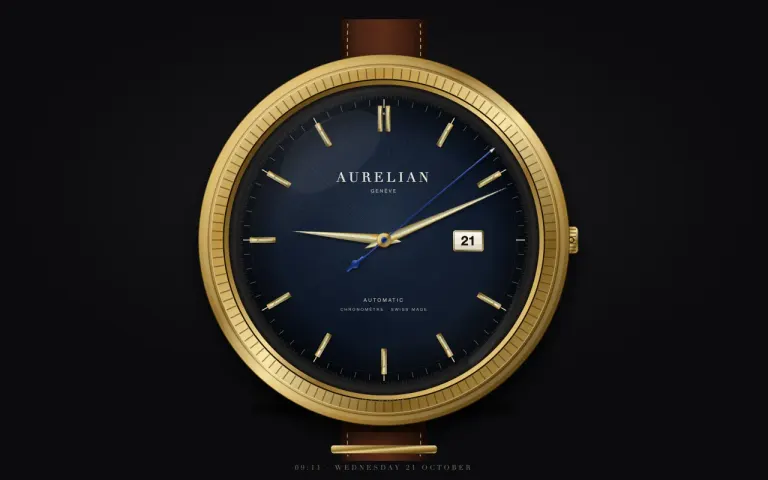
Draw a mechanical wristwatch that shows the current local time, with a sweeping seconds hand and a date window. Make it look expensive.

Landing
Build the landing page for Lumen Cycles, a Copenhagen workshop that builds custom cargo bikes to order. Make it look like a real brand you would trust with 4,000 euros.


Breakout
Make a Breakout game I can play right now with the keyboard or the mouse. Give it several levels, a score and some juice.


Logo
Design a logo for Night Heron, an independent bookshop that only opens after dark.


About
Write the opening of the About us page for Patchbay, a three-person studio in Rotterdam that repairs vintage synthesizers. About 150 words.
In a quiet industrial building overlooking the Maas, the air smells of warm dust, solder flux, and ozone. This is Patchbay, a three-person workshop in Rotterdam dedicated to keeping the golden age of electronic music alive. We don’t view vintage synthesizers as museum pieces to be locked behind glass. To us, a Roland Jupiter-8 or an ARP Odyssey is a living, breathing instrument meant to be played, gigged, and pushed to its sonic limits.
Between the three of us, we have spent decades deciphering faded schematics, hunting down obsolete transistors, and cleaning decades of club grime from beneath weighted keys. Rotterdam is a city built on raw electronics and relentless rhythms, and we take pride in keeping its hardware running. Whether you bring us a touring workhorse with a dead voice chip or a garage-find modular rig that hasn’t powered on since 1984, we are here to make it sing again.
Patchbay is three people and one workshop in Rotterdam, and we spend our days bringing old synthesizers back to life. Most of what arrives at our bench is somewhere between thirty and fifty years old: a Juno with a dead voice chip, a Minimoog that drifts out of tune the moment the room warms up, a Polysix whose battery has quietly eaten its own circuit board. We know these instruments inside and out because we have had hundreds of them open on the table.
We started Patchbay because we kept meeting musicians who had been told their synth was not worth fixing. We disagree. These machines were built to be serviced, and with the right parts, enough patience, and a good set of schematics, almost any of them can be made to play again. When we hand an instrument back, we want it to sound the way it did the day it left the factory, or better.